Warsh Turns Hawkish at Jackson Hole: Rate Hike Ahead? 5y/5y Flat, Regime Risk Underpriced
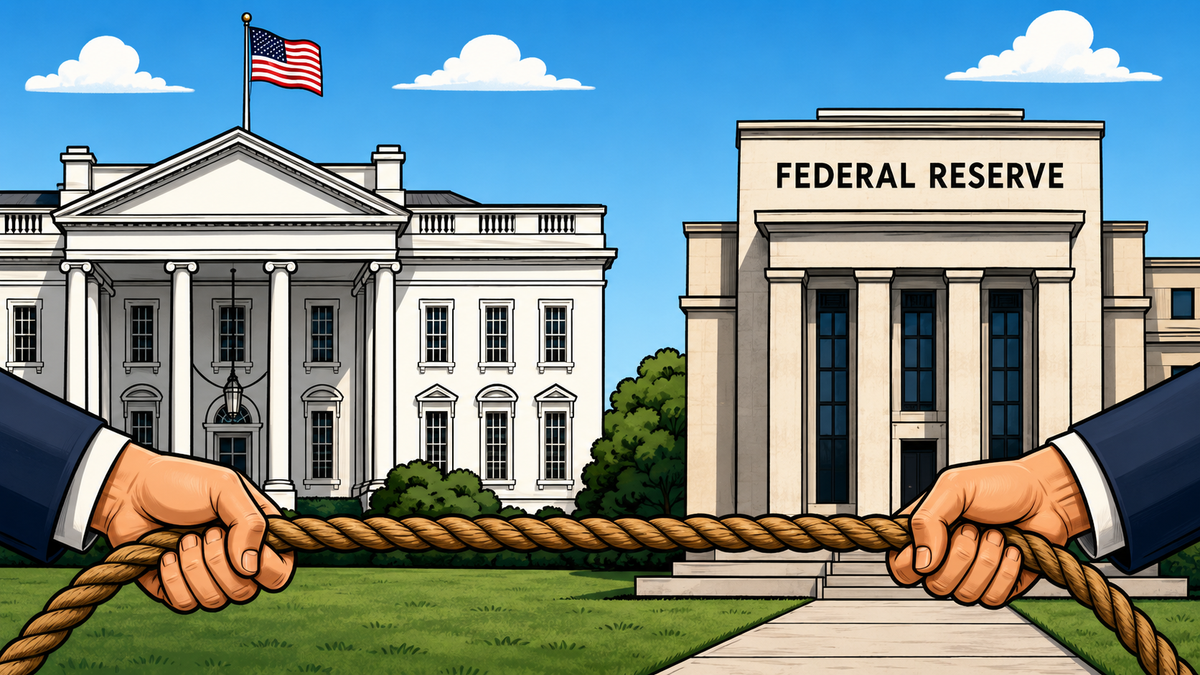
Fed Chair Warsh’s Jackson Hole Hawkish Signal: Can The Fed Hike Without Bankrupting the State?
Where to begin, that's right. Kevin Warsh is the new Fed Chair. Before he got the job, Kevin Warsh said for years that the Fed talks too much and got sloppy on inflation. Trump likes cheap money. Keep that in mind.
That should tell you everything about the political uhm climate? The White House wants cheaper money, and ironically, Warsh's reputation is NOT that of a cheap-money guy.
I break everything down, there are also non-US readers who aren't familiar with everything.
Now, you may wonder why Kevin Warsh was appointed as Fed Chair? Don't worry, I will cover that here
So why was Kevin Warsh appointed as Fed chair (it makes no sense)?
The "NOT being the cheap money guy" image of Kevin Warsh was mostly from 2006-2011, when he was the young governor who kept worrying about inflation, even during the financial crisis (Rightfully so in hindsight)
During 2025-2026, Kevin Harsh was auditioning. Kinda like during presidential elections, but candidates doing a full 180 once elected.
Like there's no way Trump said down in January and said: “I would like a man who will refuse to cut rates before midterms” 😂
It probably went more like “Powell won't give me lower rates. I want my own Chair (and hookers). Someone who hates Powell but looks like a real central banker and won't make the Treasury market freak out”
Warsh was that guy on the way in
For about a year before nomination, he was not walking around as Mr Higher for Longer.
Kevin Warsh was on TV and in op-eds, saying the Fed missed the plot, that Powell should've cut, that AI would raise productivity enough to deliver growth without much inflation, and that Trump was right to be angry.
Catnip if you're Trump, who believes the only thing standing between you and cheaper money is the current Chair.
Sure, there were other names who would've cut faster and smiled bigger, but the problem with them is the bond market.
However, the overwhelming consensus among Wall Street, major Republican donors, and key Treasury advisers was that appointing an obvious "yes-man" as Chair would trigger a bond market disaster.
If investors (eg., Japan, mainland China, Sovereign wealth funds) suspected the central bank was taking orders directly from the Oval Office, they would dump U.S. Treasuries, causing long-term yields to skyrocket and making mortgages and consumer loans dramatically more expensive anyway.
So they needed someone who already looks like a Fed Chair. Warsh had done that job before as the youngest-ever Federal Reserve Governor from 2006 to 2011. He was directly in the room managing the 2008 financial crisis, giving him the immediate institutional gravitas that an untested political appointee lacked.
Trump also likes winning the institution
Trump also likes winning the institution, not just the next meeting. Kevin Warsh's other pitch was “stop the Fed from talking so much”. Under Jerome Powell, the Fed leaned heavily on Powell being a talking machine.
Too much forward guidance, too many forecasts, too much managing the next trade. Warsh argued that this practice caused the FOMC to suffer from mission creep and make systematic errors because it locked the committee into pre-announced paths.
By promising to ditch the theater (such as the famous "dot plot" forecasts), Warsh offered Trump a complete structural dismantling of the previous regime.
Trump's frustration with the Fed was that he believed it was too late, too insulated from real-world accountability, and too focused on managing Wall Street's daily feelings.
Warsh got in because his pitch was to quiet the central bank and pull it back from trying to micro-manage the market's next trade.
For Trump, reshaping how the Fed functions as an entity is a much bigger, profound philosophical victory and a more permanent legacy than a single 25-basis-point cut.
So what happened last Friday during Jackson Hole?
Jackson Hole is the Fed's big annual conference. Mostly half ideas, half role-playing/larping. The market treats this conference like a policy.
Kevin Warsh, yeah, he hates forward guidance. Forward guidance is when the Fed basically narrates the next few meetings. “We expect to hold, we expect to cut. Here's a set of little dots showing where everyone thinks rates will be. ”
Warsh has a different view. He thinks it makes investors lazy. They stop watching the economy and focus too much on the script, and the Fed gets stuck with it.
Fine in theory, but this looked messy in June. The Fed didn't hike. Wash still talked as if inflation were the emergency. Markets did what markets do when words and actions don't match. They assumed he was bluffing. Or assumed that he wanted Treasury yields to rise on their own, so financial conditions would tighten without him having to do the unpopular thing.
After that meeting, the yield curve steepened, and investors demanded more yield to hold long-term Treasuries. That's the term premium going up. It basically means, “investors want to be paid more because they're less sure you people know what you're doing”.
Hawkish quotes, no hike, less communication, so traders filled in “He's probably fine living with inflation a bit high”.
So Warsh tried to fix that during Jackson Hole without becoming like the old Fed (Jerome Powell being a talking machine).
He still didn't give a date. He even made a little about it. “You can call it an outline, you can call it a trail map, just don't call it forward guidance.”
Mocking the market's demand for hand-holding by arguing that giving "quasi-commitments" leads businesses and households astray.
And after that, he said the part he'd been avoiding. Inflation has to fall back to 2%. “The responsibility for 65 months of sustained, elevated inflation sits squarely with the central bank. And that is where it belongs.”
The recent data were better than feared. The summer's softer inflation did not convince Warsh that the underlying trend is improving.
“We must be confident that underlying inflation is moving to our objective, clearly and at sufficient speed. Otherwise, we have work to do. That’s our job . . . our mandate . . . and our charge to keep.”
The reaction in the short-term futures market immediately following the speech, CME FedWatch data showed the probability of a September rate hike flipping from a minority chance (35% to 40%) to a clear majority expectation by jumping to ~58% to 62%.
In my blog post back in July, I believed a rate hike on July 29th made more sense and was politically cheaper to sell. I knew they had to hike. They did not, but not hiking would be like kicking the can further down the road.
Join Discord
Become a Premium member. Premium newsletters & Discord community access
When rate hike?
Historically, hiking interest rates 6 weeks before a midterm election is considered institutional suicide if a Fed Chair wants to avoid a declaration of war from the White House.
So, I don't think they will hike this September. My best guess is the Fed won't pick that fight.
If Warsh does pull the trigger on September 16, he will become public enemy number one for the administration that just appointed him.
However, he introduced the phrase "otherwise, we have work to do", so he gave himself optionality. If the data is ugly, he can hike and claim he's an independent central banker forced to clean up 65 months of slop.
The Federal Open Market Committee (FOMC) is not a monolith. A significant block of voters is completely uncommitted. The next important dates are the September 4th jobs report and the September 11th CPI number.
- September 4 (Non-Farm Payrolls): If the labor market shows severe cooling or cracking, the fence-sitters will lock arms and refuse to hike, arguing that the "maximum employment" mandate is in jeopardy.
- September 11 (CPI Inflation): If core inflation stays sticky or ticks back up, the "work to do" camp wins the majority, and the political risk of the midterms will definitely be overridden by the fear of losing the inflation anchor.
Something big, something weird
Markets have a way of pricing inflation way out in the future. It's the 5-year/5-year inflation swap. I know the name looks a bit intimidating, but don't get hung up on the name.
It's roughly 5 years from now, what inflation do you expect over the following 5 years? If that sits near 2%, the market is saying the long-run regime still looks like the official target.
Here's the thing that's so weird.
The 5-year/5-year inflation swap hasn't budged despite Brent crude pushing past $90 a barrel and the U.S. and Iran actively firing missile strikes over the weekend for the first time in a month.
The US hit Iranian launchers. Iran sent missiles and drones at American bases in Jordan. That is usually the sort of thing that makes people nervous about inflation.
This time, the long-term inflation market barely shrugged.
Compliment? Maybe
You can take that as a compliment. The market might be signing faith in institutional power. Inflation is a "choice," and the responsibility sits "squarely with the central bank," as Warsh might have successfully convinced investors that the Fed will act as an absolute backstop.
The logic is that even if the ongoing war in Iran pushes Brent crude past $90 a barrel or disrupts the Straight of Hormuz, investors believe the Fed and the ECB will aggressively suppress aggregate demand via high rates to prevent those supply shocks from bleeding into long-term psychology. The flat 5y/5y swap means the market believes the central bank will win the war against inflation, no matter the cost to growth
Possibly a warning
Or the other possible interpretation is more ominous. The flat swap market isn't a sign of peace but a sign that the metric is being distorted by a structural shift towards fiscal dominance.
The U.S. government is drowning in debt and facing massive issuance needs. To prevent the long end of the Treasury market from spiraling out of control, the Treasury Department has already begun aggressively stepping in with massive short-term financing maneuvers and long-term bond buybacks to artificially suppress long-term interest rates.
When the Treasury Department is forced to manage the bond market to keep the government solvent, traditional indicators like the 5y/5y inflation swap stop functioning as pure gauges of inflation, and instead they become reflections of a trapped regime.
If investors have stopped using energy shocks to price long-run inflation because they realize the central bank's independence is hitting a wall of absolute government debt, the stability we're seeing right now is an illusion.
Structural regimes don't gracefully unwind. Maybe when the market finally realizes a central bank can no longer hike rates because doing so would bankrupt the state, the system snaps?
So, last Friday, bonds didn't sell off because the Fed sounded hawkish. Market response was nuanced. Investors are now keeping in mind the possibility that the Fed can hike and that rate hikes are on the table.
Warsh showed he was willing to entertain the idea of short-term economic pain and successfully relieved the structural fear that inflation would run rampant over the next decade.
Whether that sticks, we will see. The speech only bought him the benefit of the doubt.
Become a Premium member. Premium newsletters & Discord community access

Discounts
Yearly subscription: https://www.romanornr.io/50-off-forever-yearly
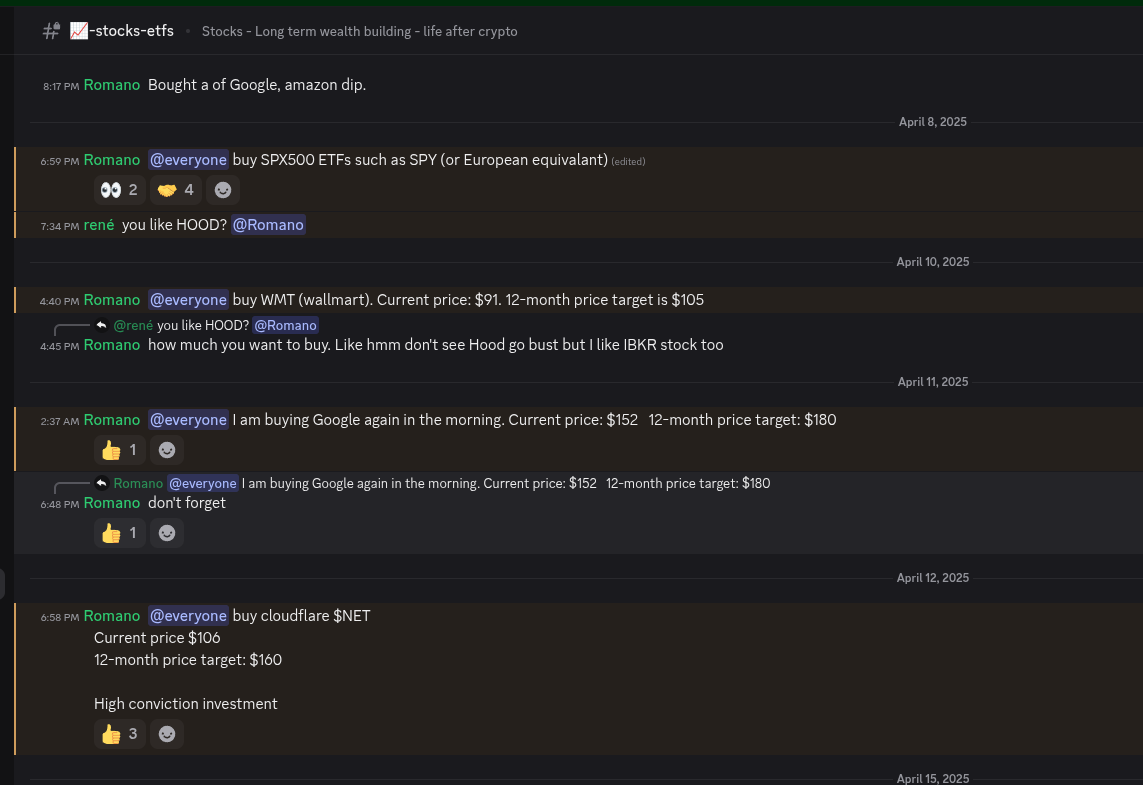
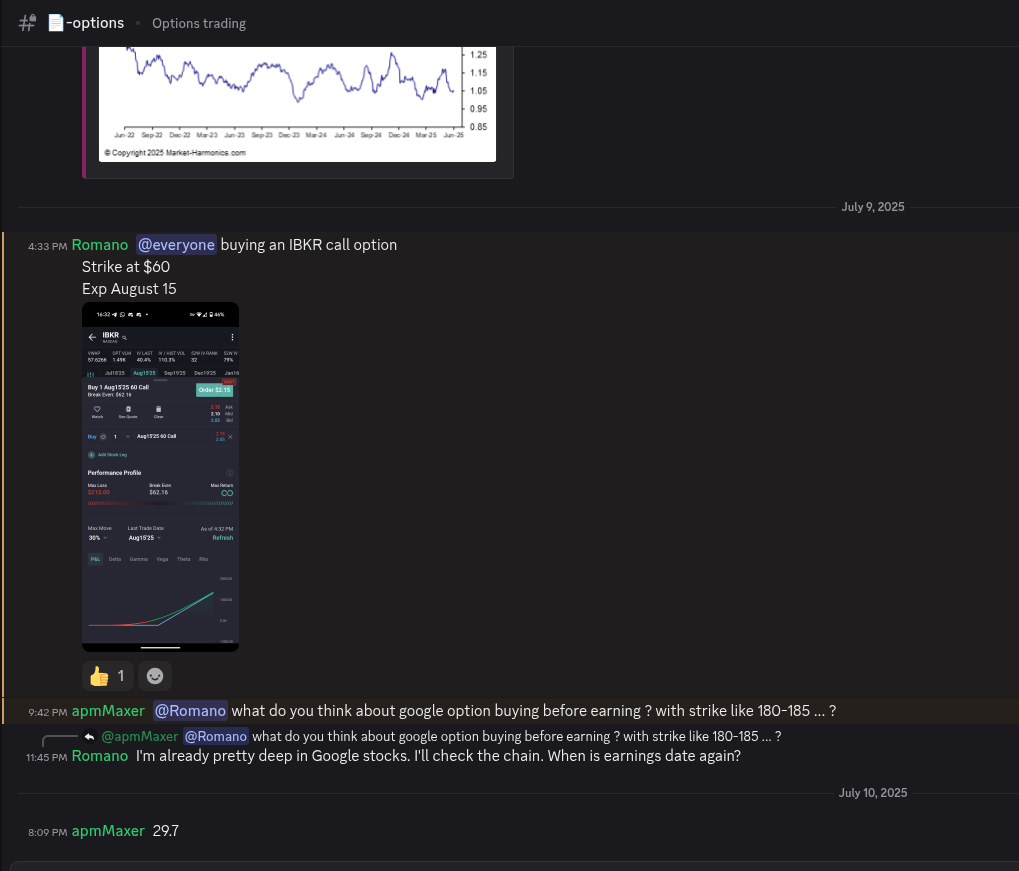
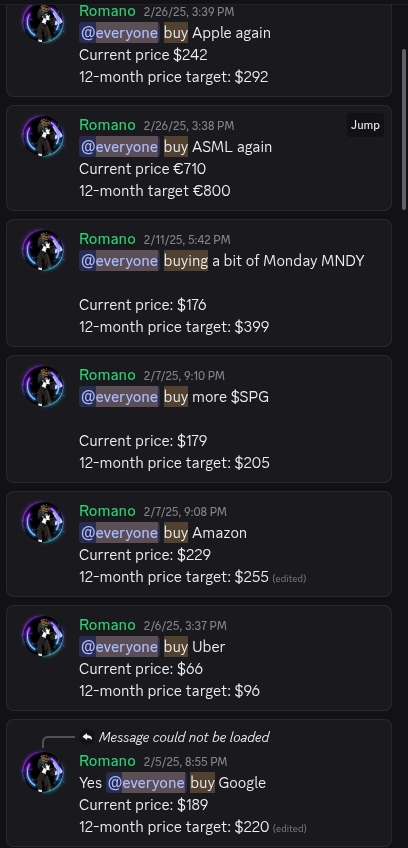
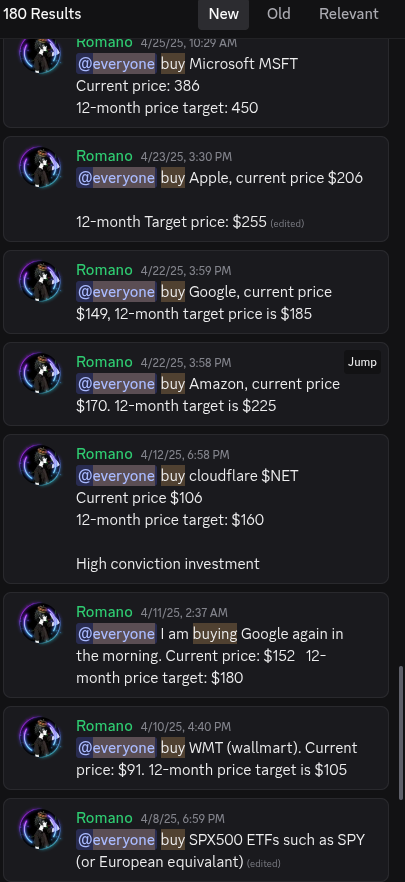
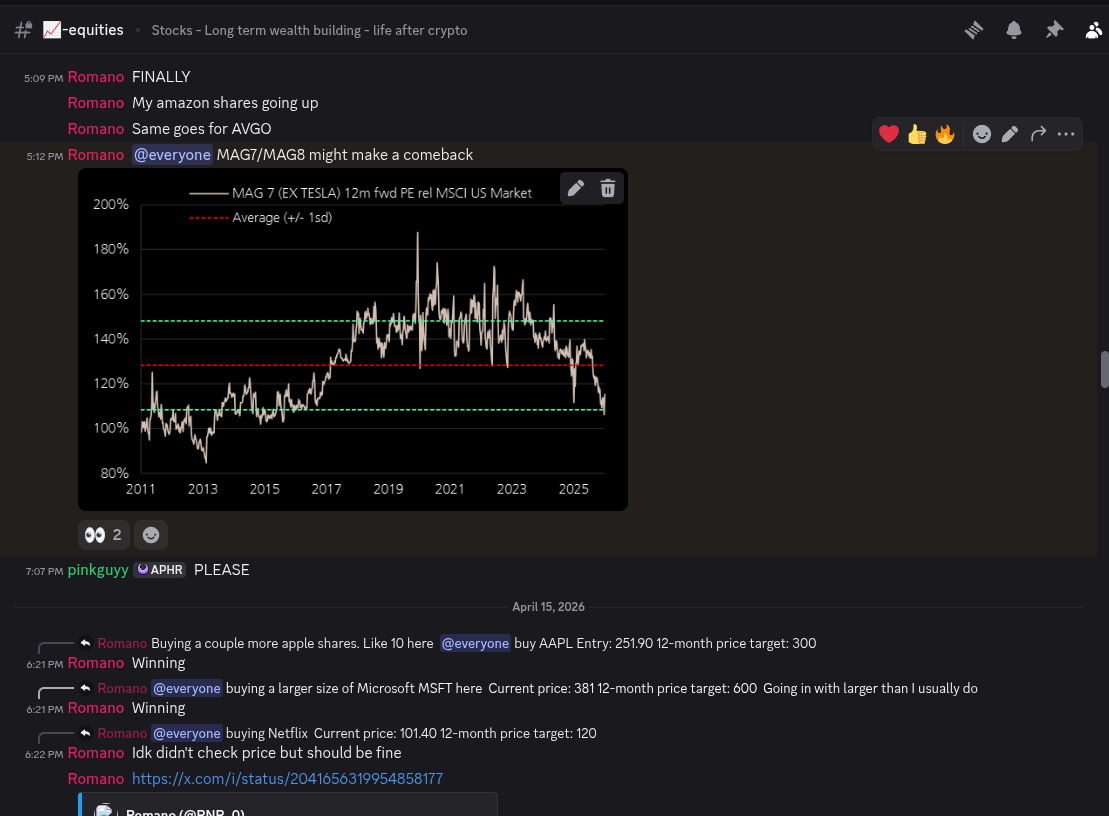
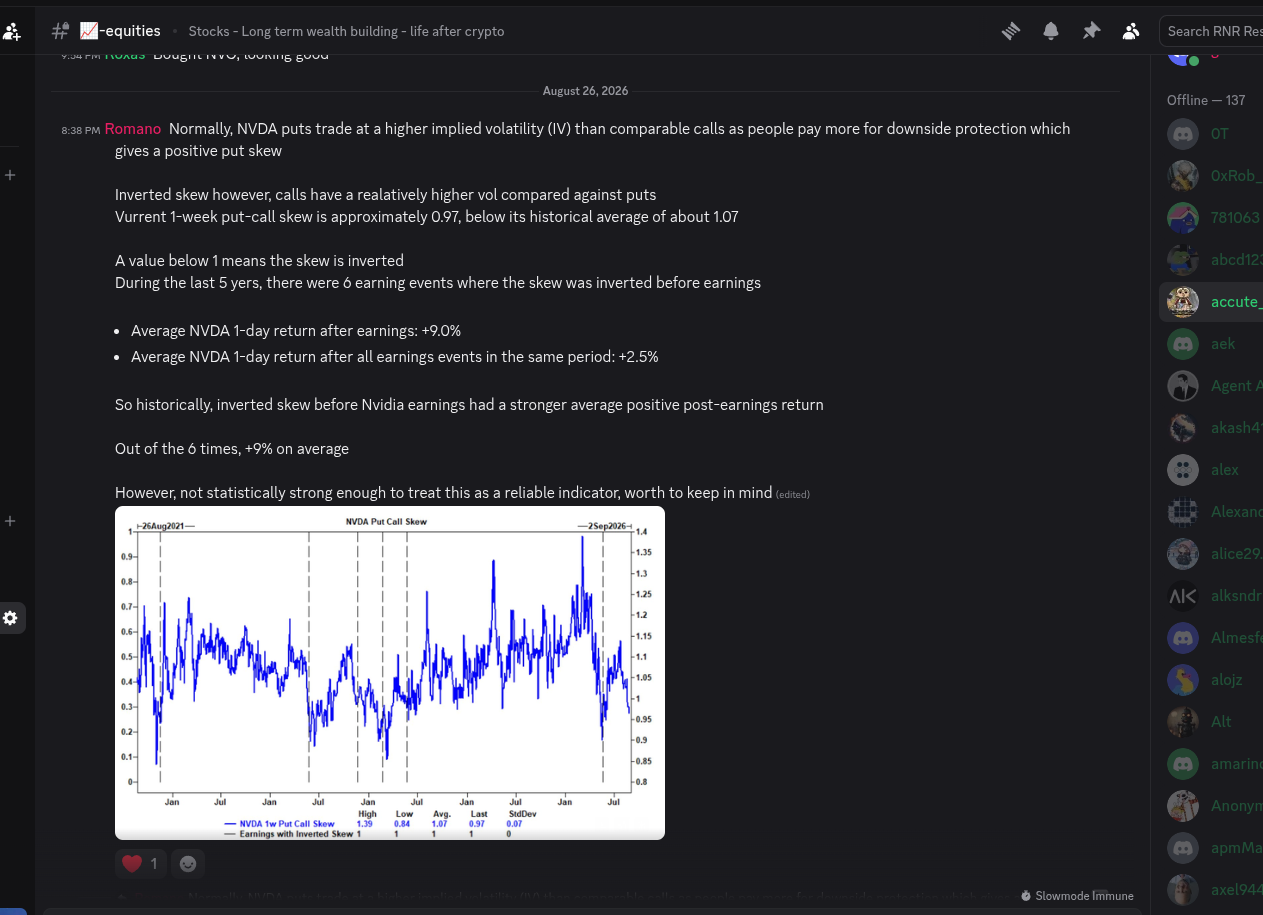
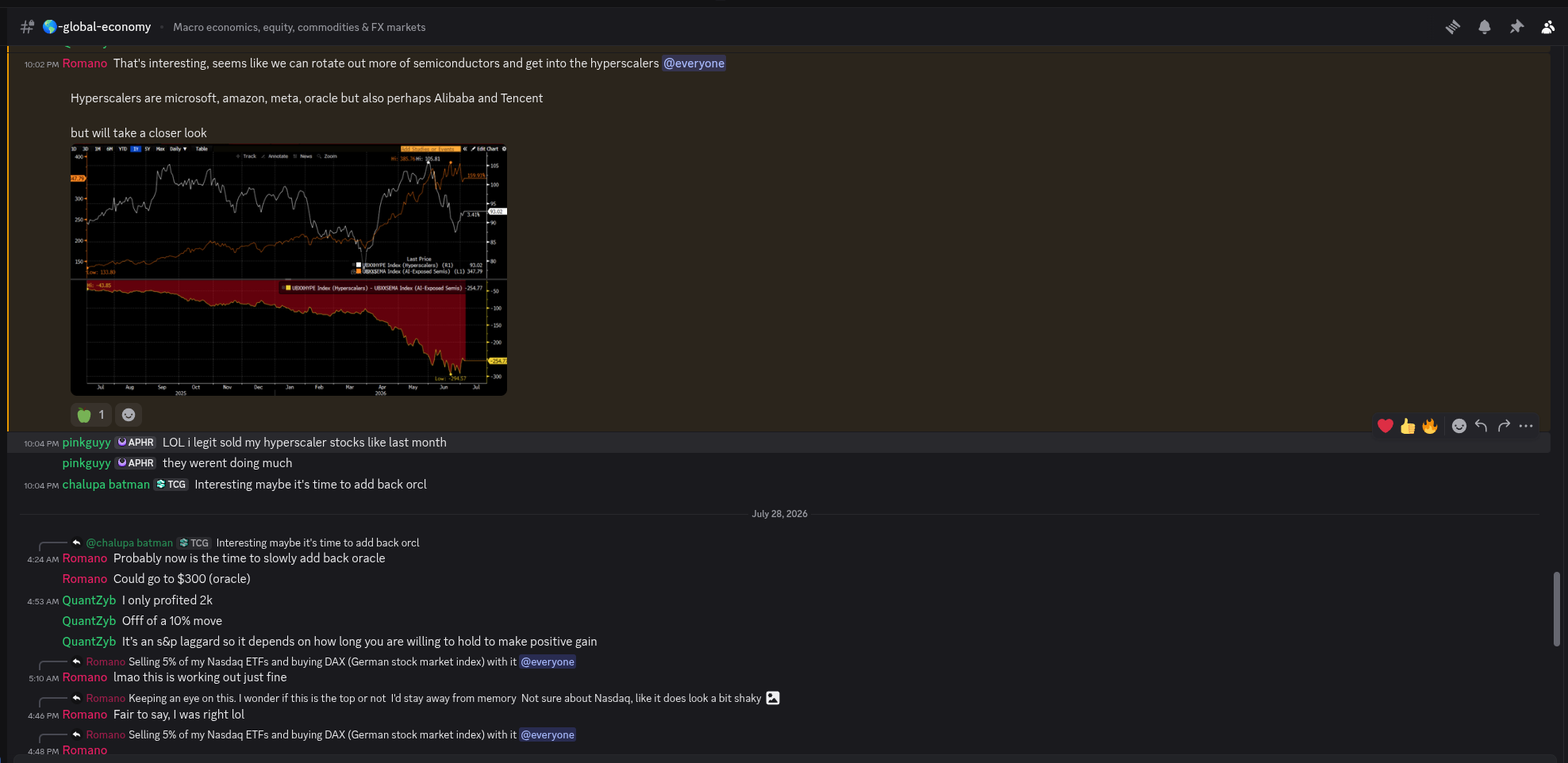
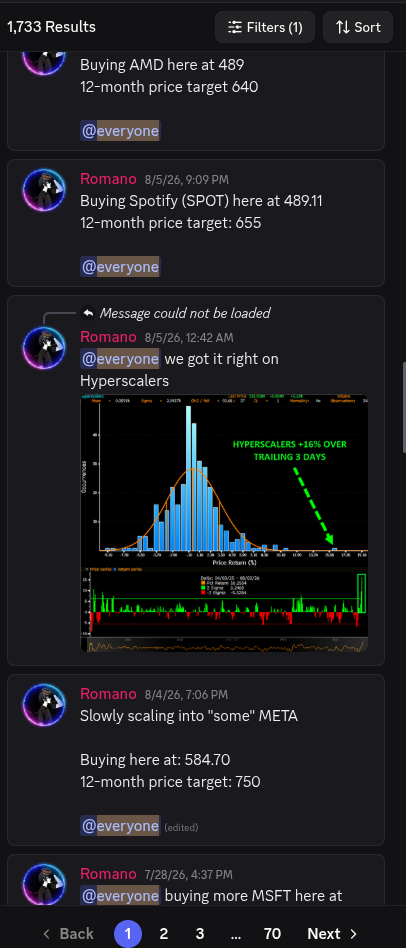
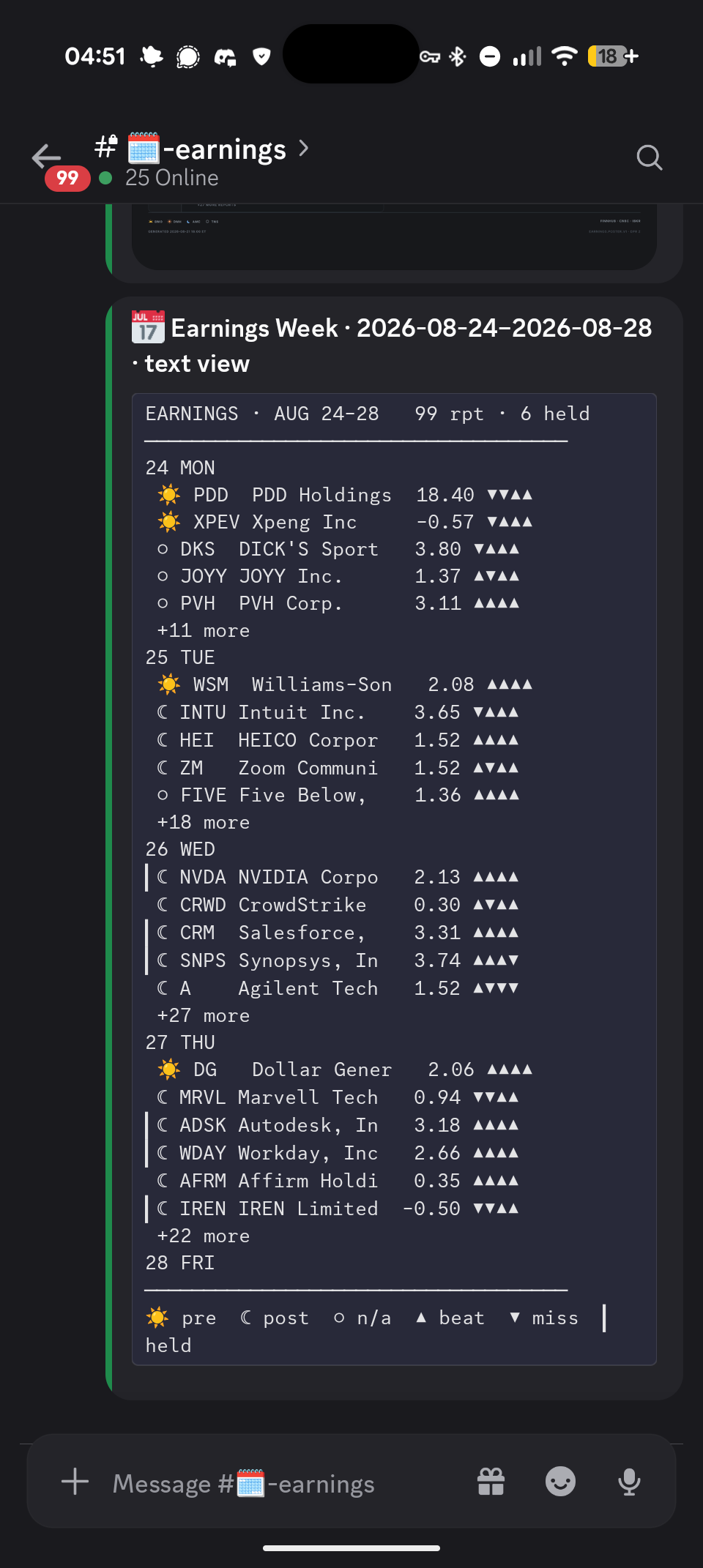
What's also new, a new Discord channel has been created where
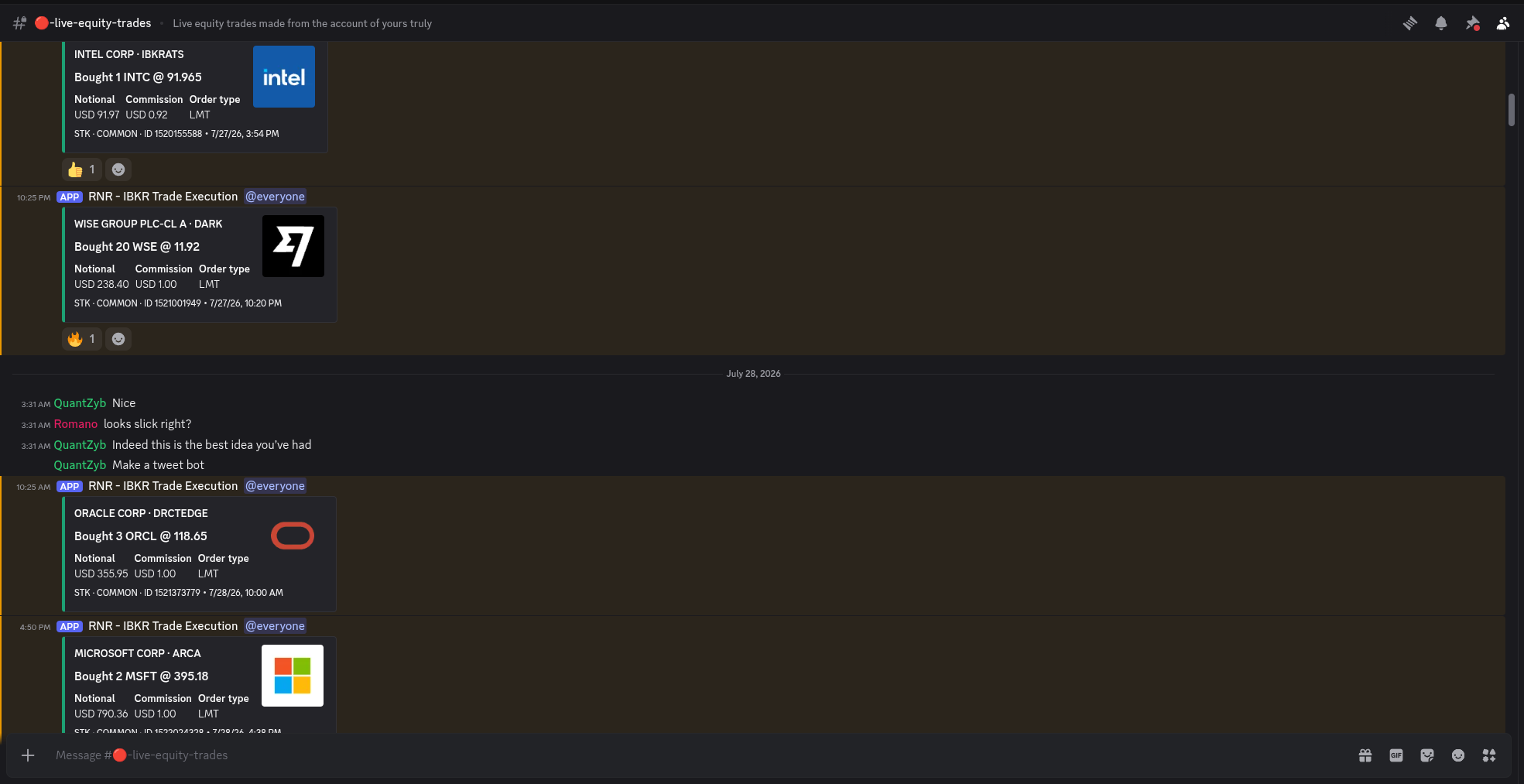
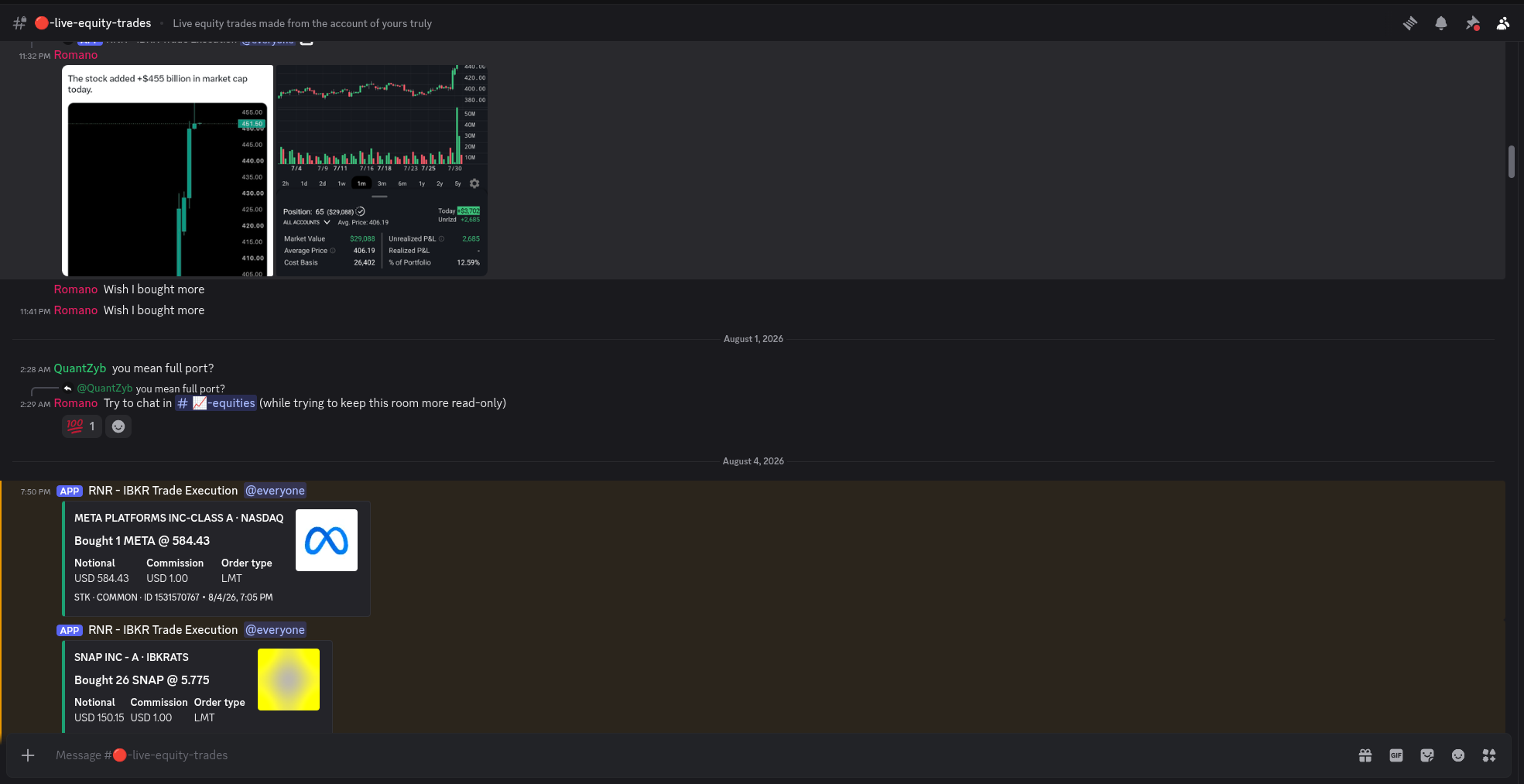
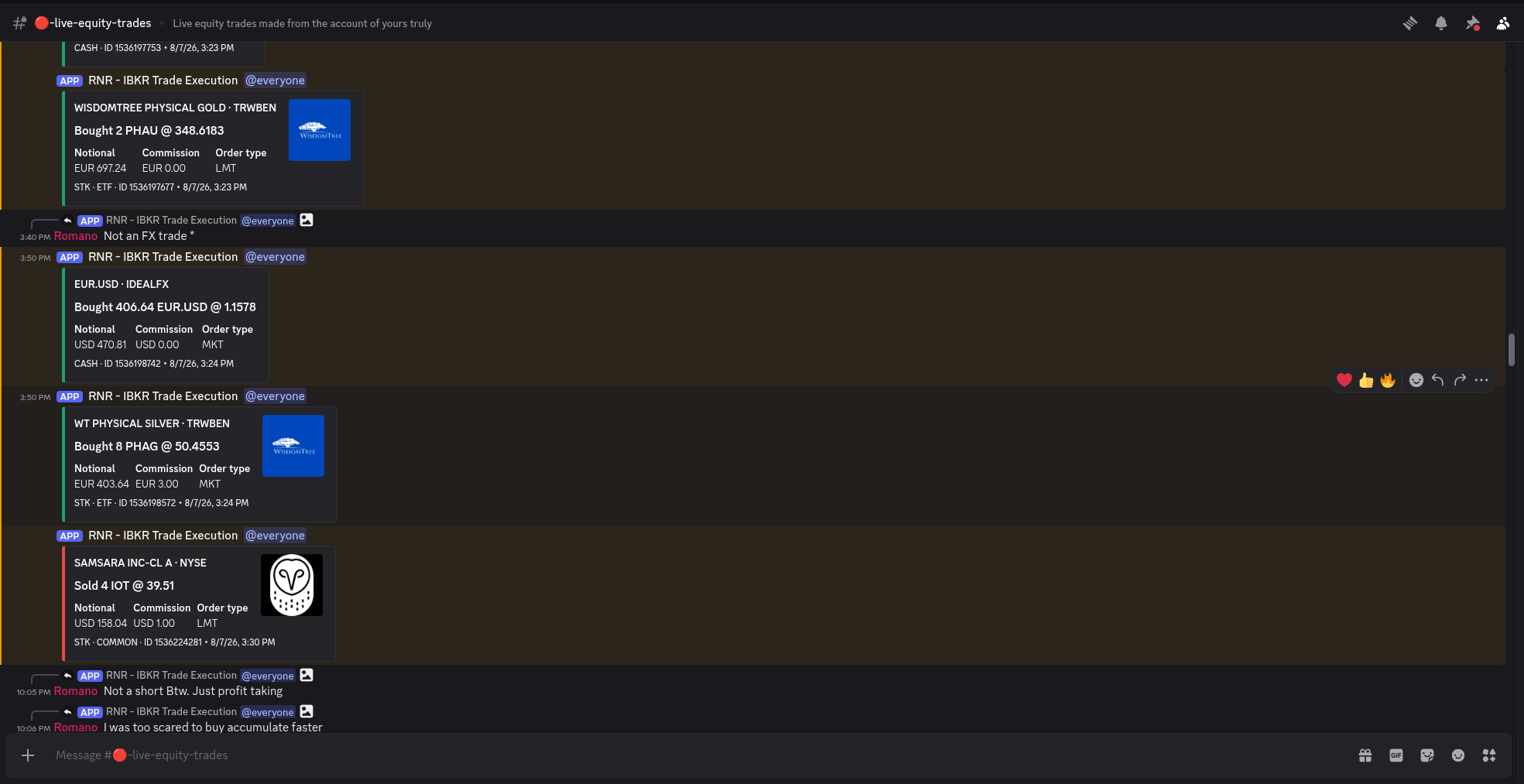
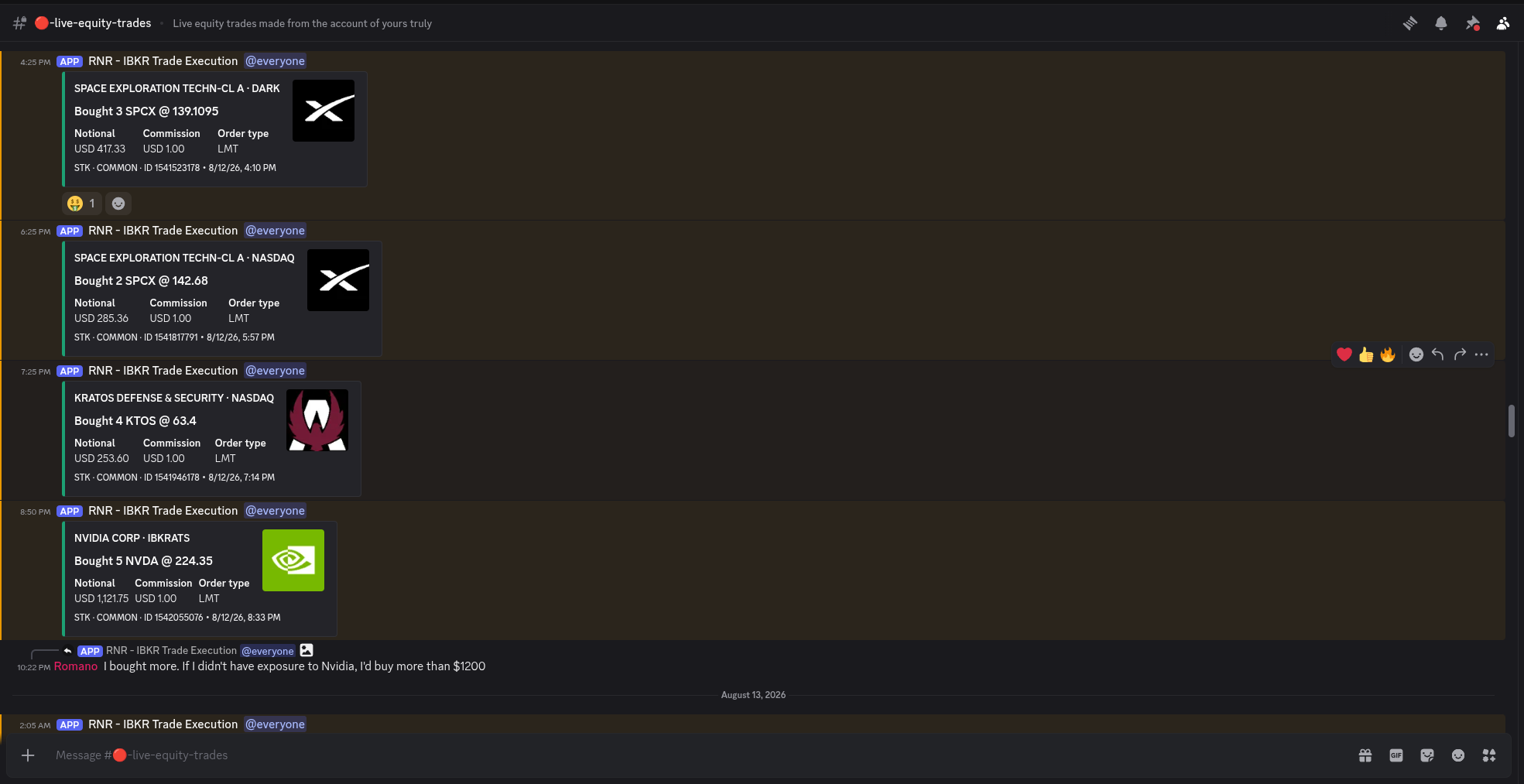
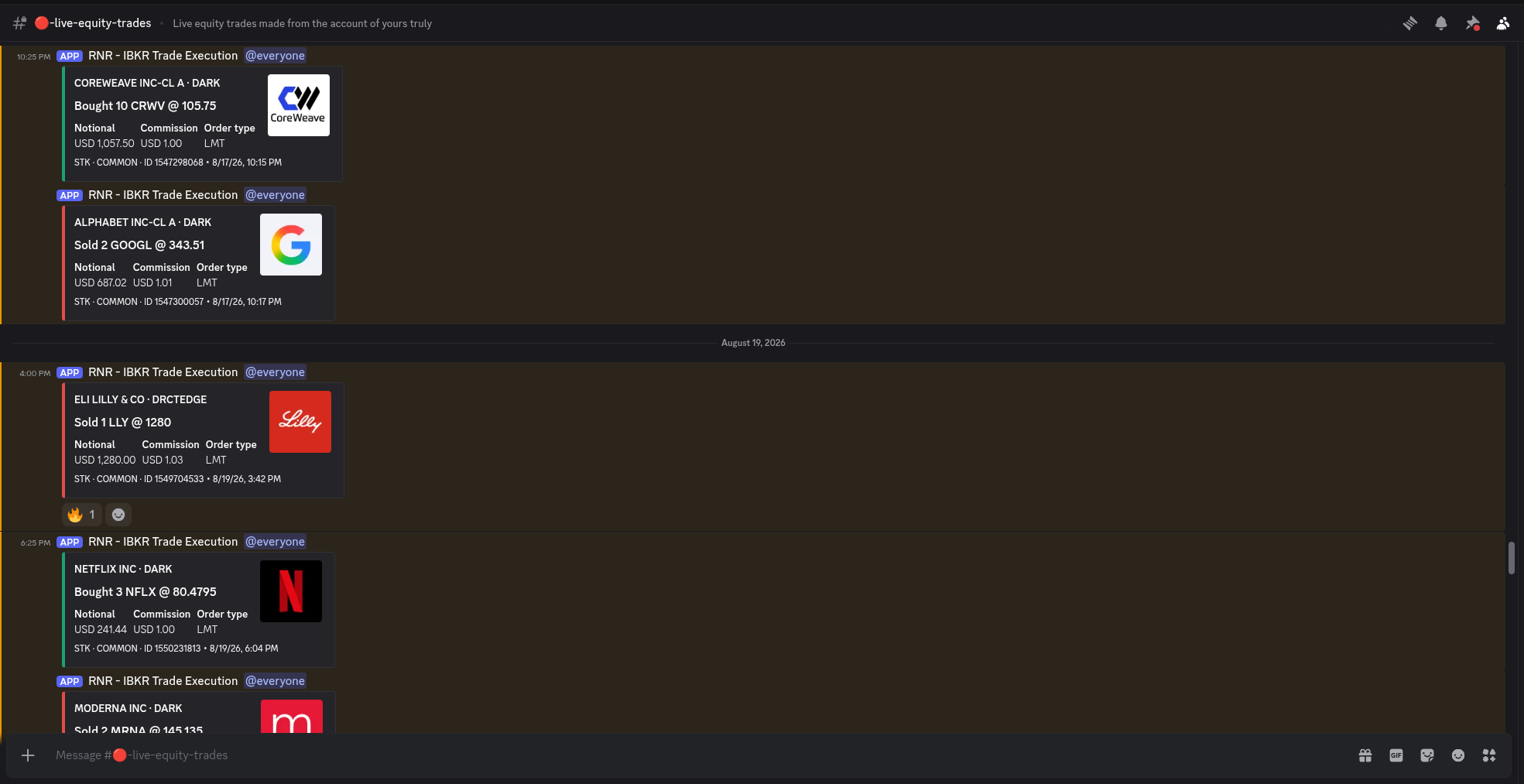
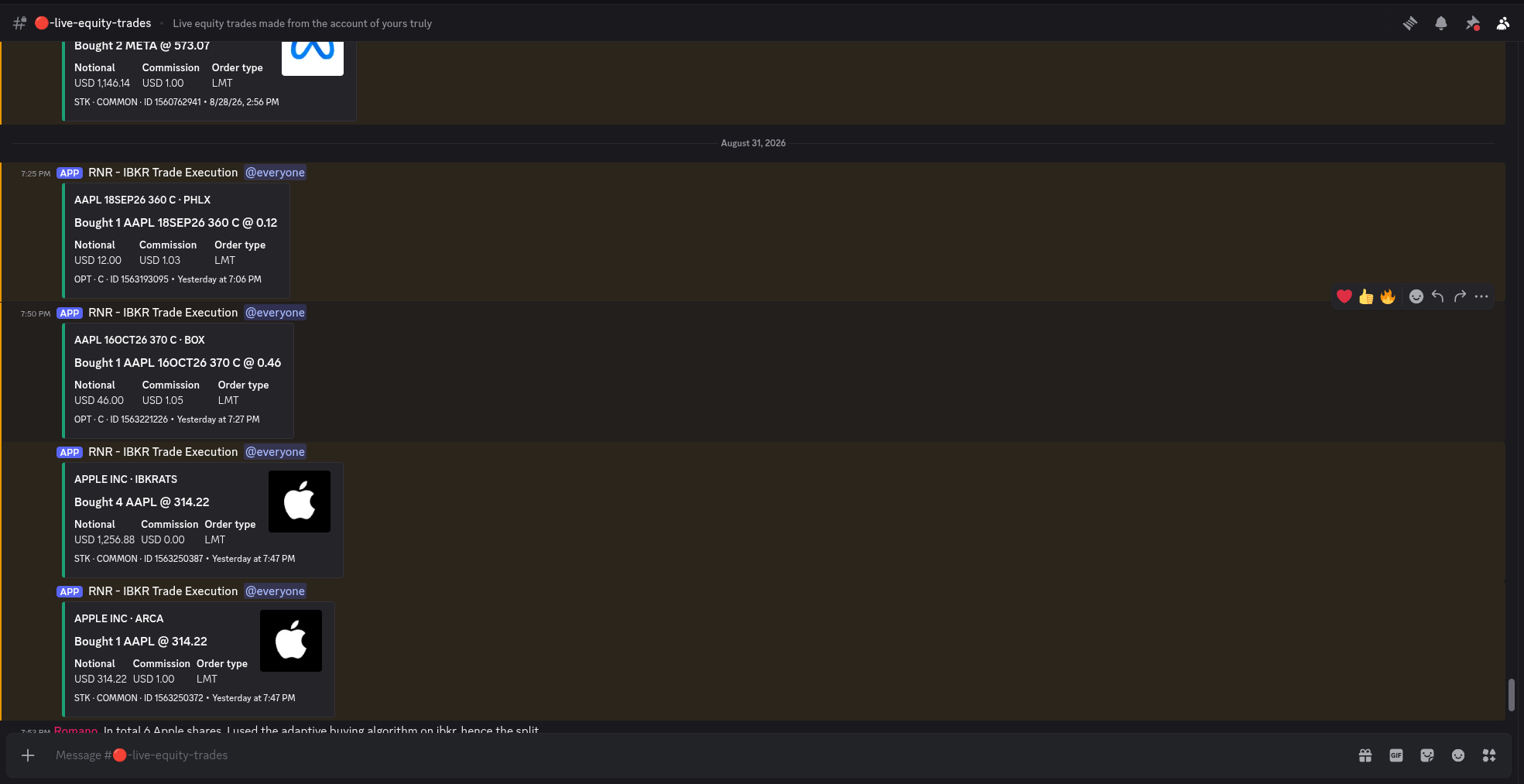
Every stock/equity trade I make on IBKR now gets posted there automatically, straight from my broker. Ticker, direction, size, price, and fees.
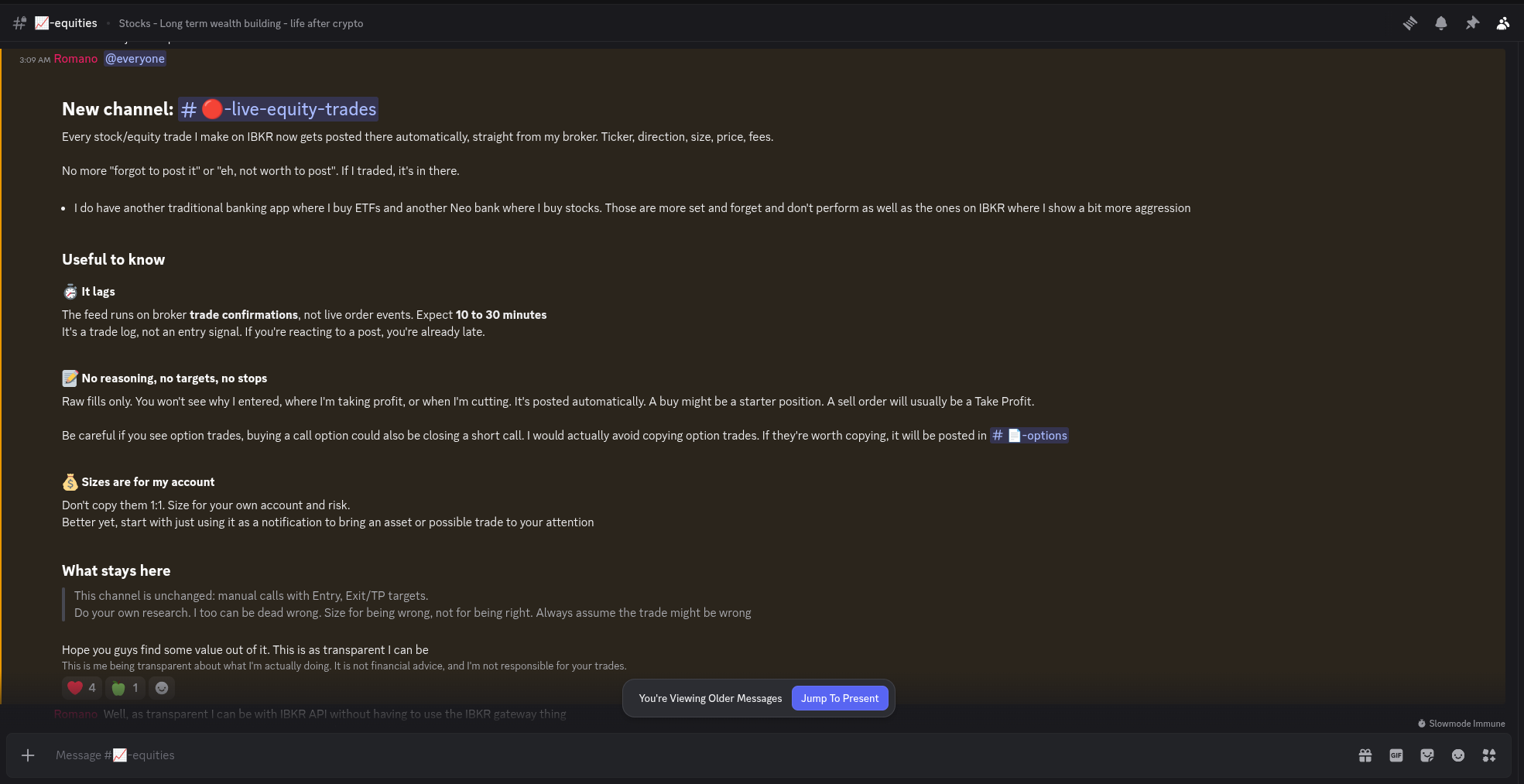
Few screenshots
Backtest, if buying every call made on Discord, equal size
Whatever returns you see, they're higher, but the dividends aren't properly accounted for
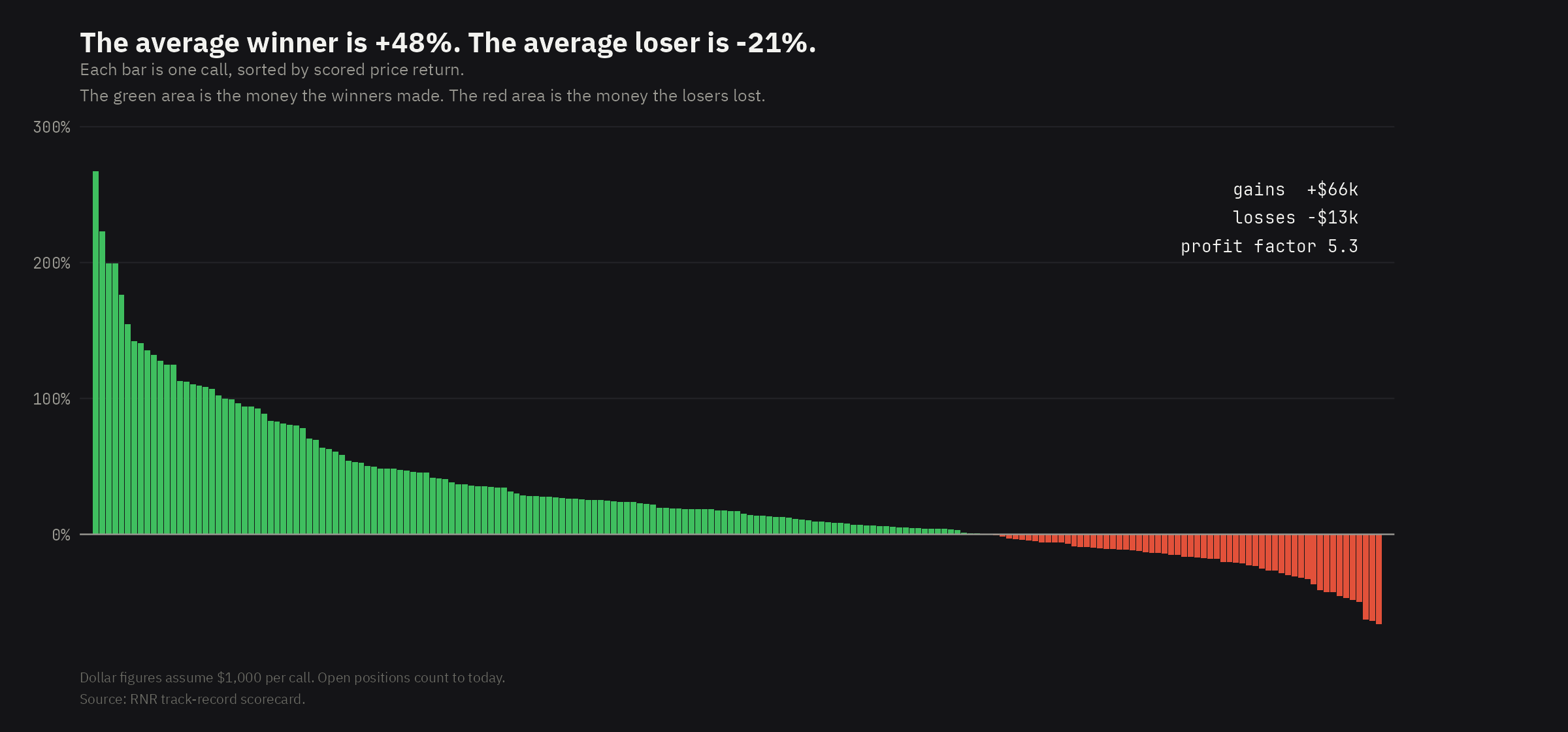
Every call on one board, 91 of them hit their target
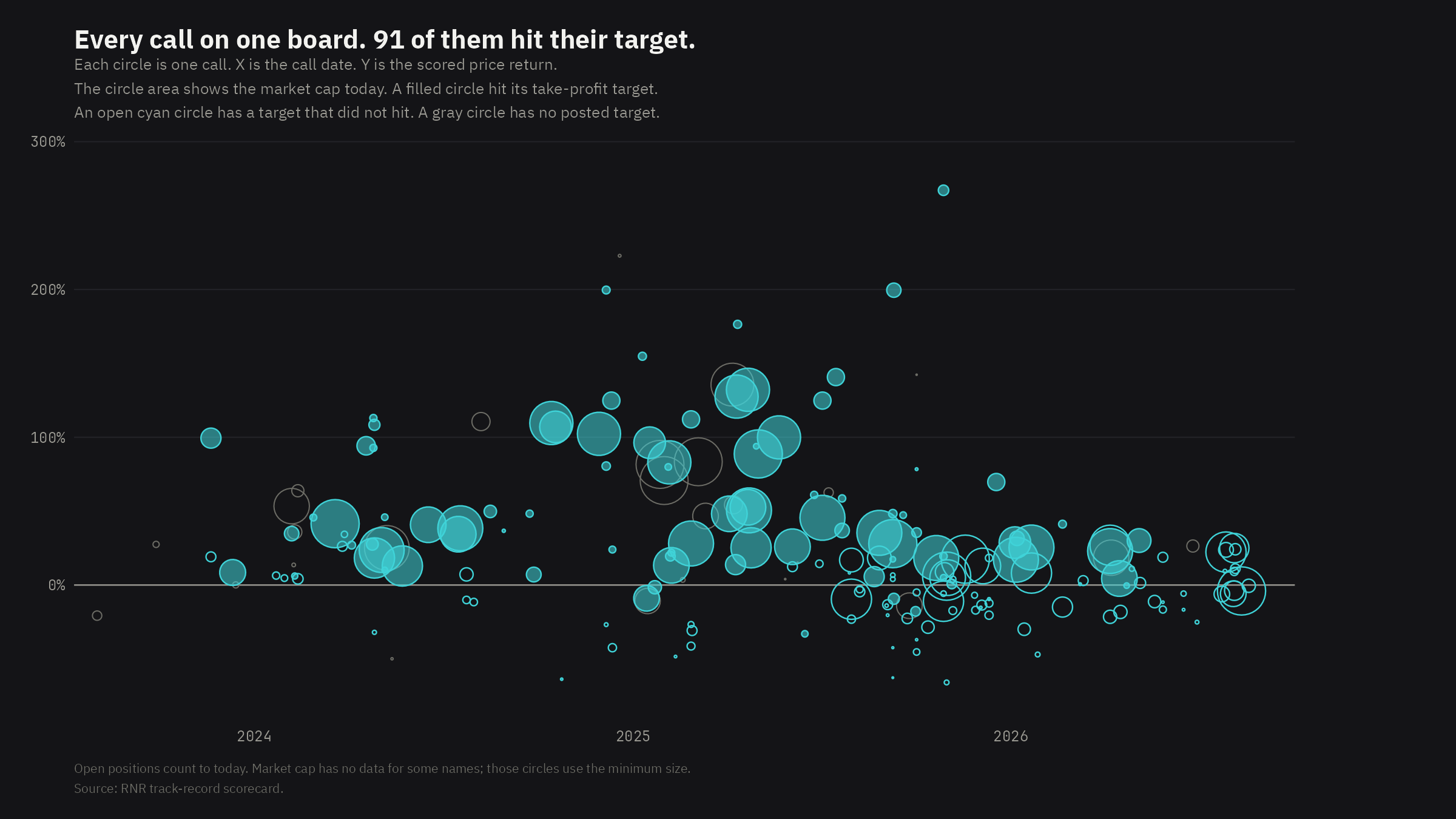
Obviously, when you choose different sizes based on eg., market cap, conviction, and trend, the returns are sharply higher
Things such as ETFs here, e.g., energy ETFs and Gold ETFs, weren't included in this backtest, but the result would be better. I do recommend having 19% of the portfolio in gold,
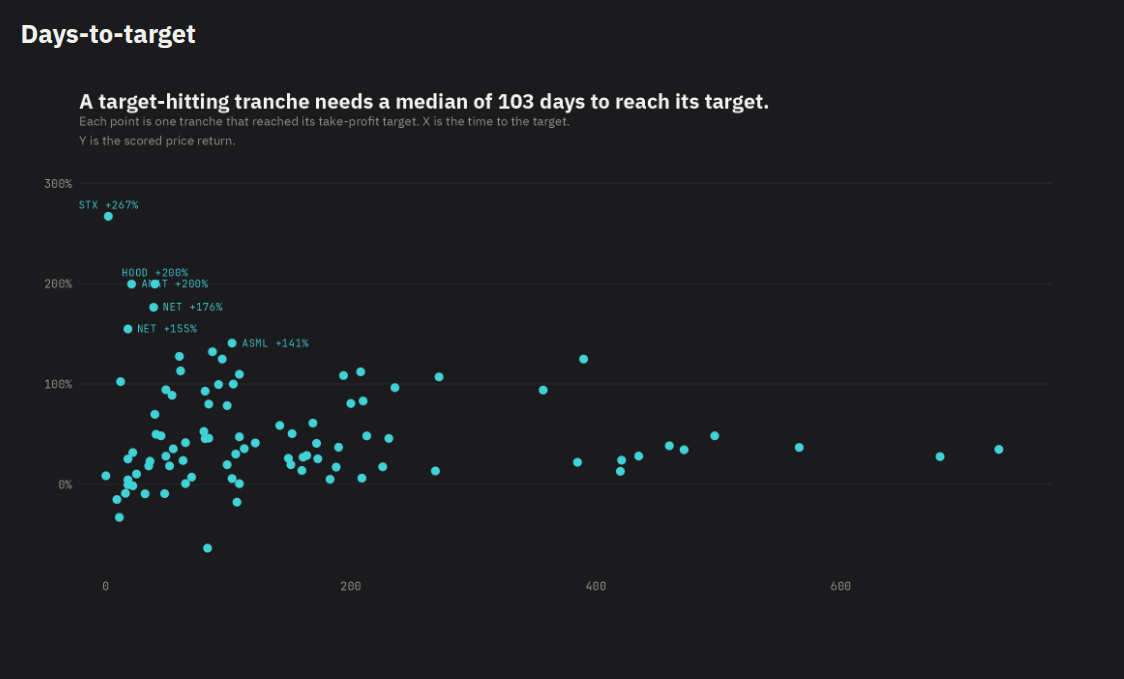
How fast targets hit
Become a Premium member. Premium newsletters & Discord community access